
Recently, Osama Suzuki left us, so as a tribute, we have prepared the best cars during his time running the company.
Suzuki Capuccino: Mini Mx-5.
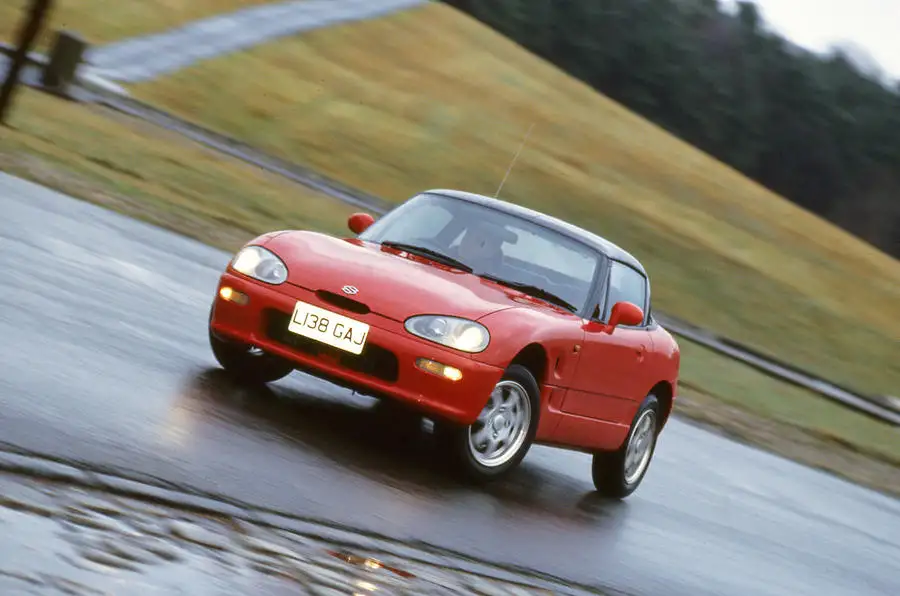
Suzuki Cappuccino is a true Japanese legend among compact sports cars, known for its small size, excellent handling, and unique design. With a length of just 3.3 meters and a weight of only 725 kg, the Cappuccino impresses with its compactness. It’s an ideal car for Japan’s narrow streets and limited parking spaces, while also providing the driver with unforgettable driving experiences thanks to its sporty characteristics.
Its 0.66-liter turbocharged engine develops 64 horsepower, giving the Cappuccino solid performance. For such a small car, the combination of power and low weight makes its acceleration to 100 km/h in 8 seconds quite impressive.
This sporty little car is equipped with a manual folding roof, allowing the driver to enjoy the feeling of open air, turning every drive into an unparalleled pleasure.
Thanks to its rear-wheel-drive platform and light suspension, the Cappuccino offers excellent handling and stability, making every trip, even within the city, truly exciting. Despite its modest engine size, this car proves that even small vehicles can provide a genuine sports car experience.
Read too:
Mega Track: The Story Behind the Car that Combines Speed and Off-Road Capability
Suzuki X-90: Mini-SUV with sporty appeal
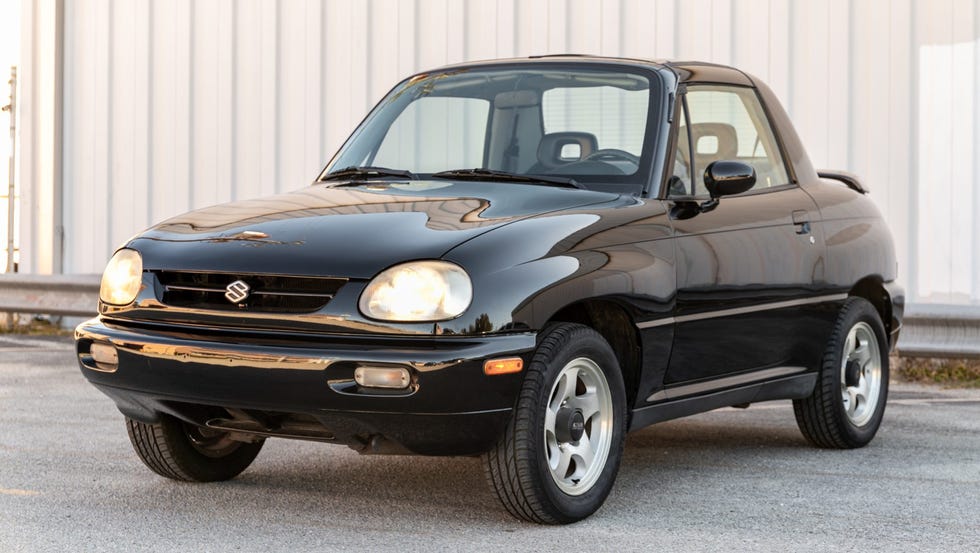
Suzuki X-90 is a compact crossover that was released in 1996 and became one of the most unusual models from Suzuki. The vehicle combined a sporty character with the functionality of an SUV, making it an interesting choice for drivers seeking a car with good off-road capabilities in a compact size.
X-90 was equipped with a 1.6-liter four-cylinder engine producing around 95 horsepower. This provided enough speed and maneuverability for city driving and light countryside trips. The model was available with both front-wheel and all-wheel drive, allowing drivers to feel confident on different types of roads, though the vehicle was not designed for serious off-roading.
X-90 also featured an air suspension, ensuring a comfortable ride even on uneven roads. While it didn’t become a market hit due to its unconventional design and limited practicality, the model left its mark in history as an interesting experiment by Suzuki in creating a compact SUV with elements of a sports car. Production of the X-90 was discontinued in 1998 due to low demand.
Read too:
The real face of Ferrari design without Pininfarina
Suzuki Fronte coupe: mini sportcar
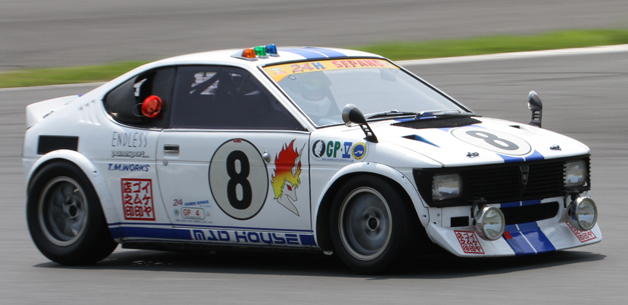
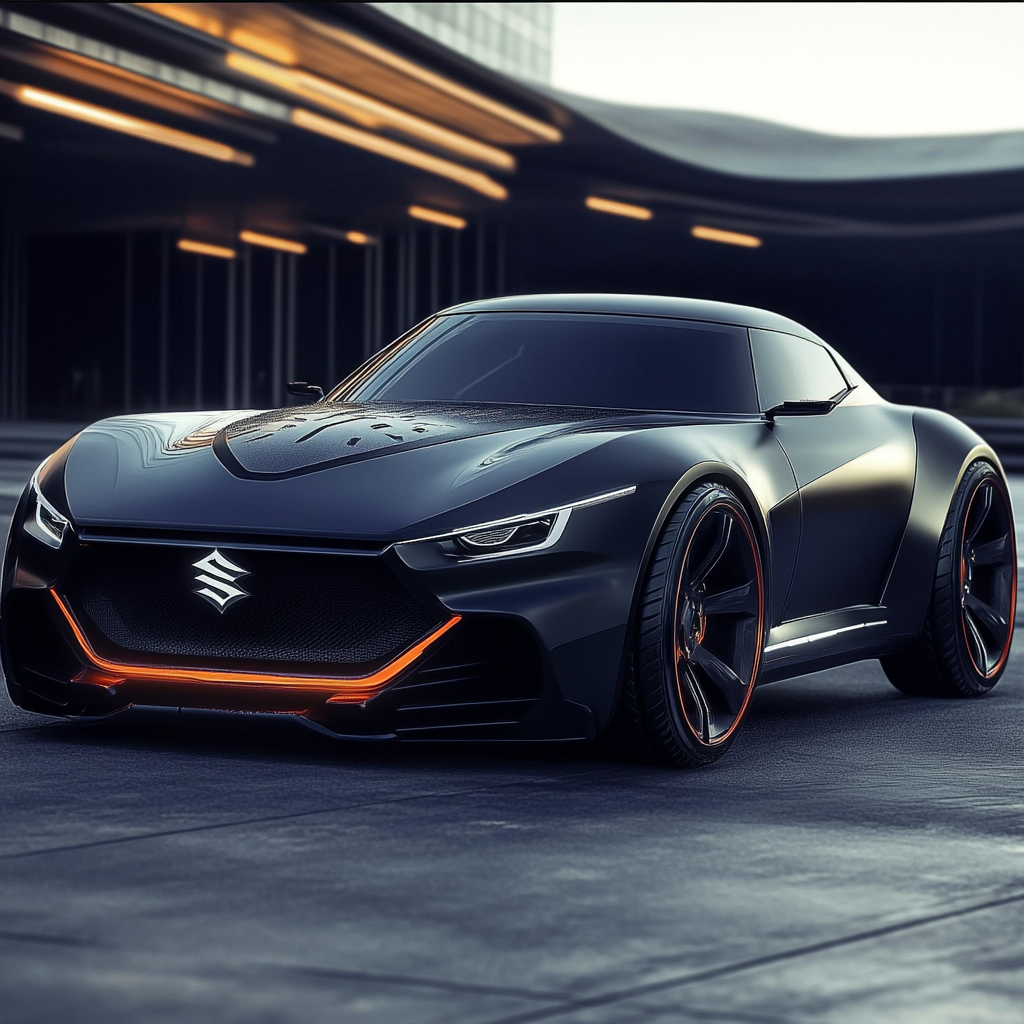
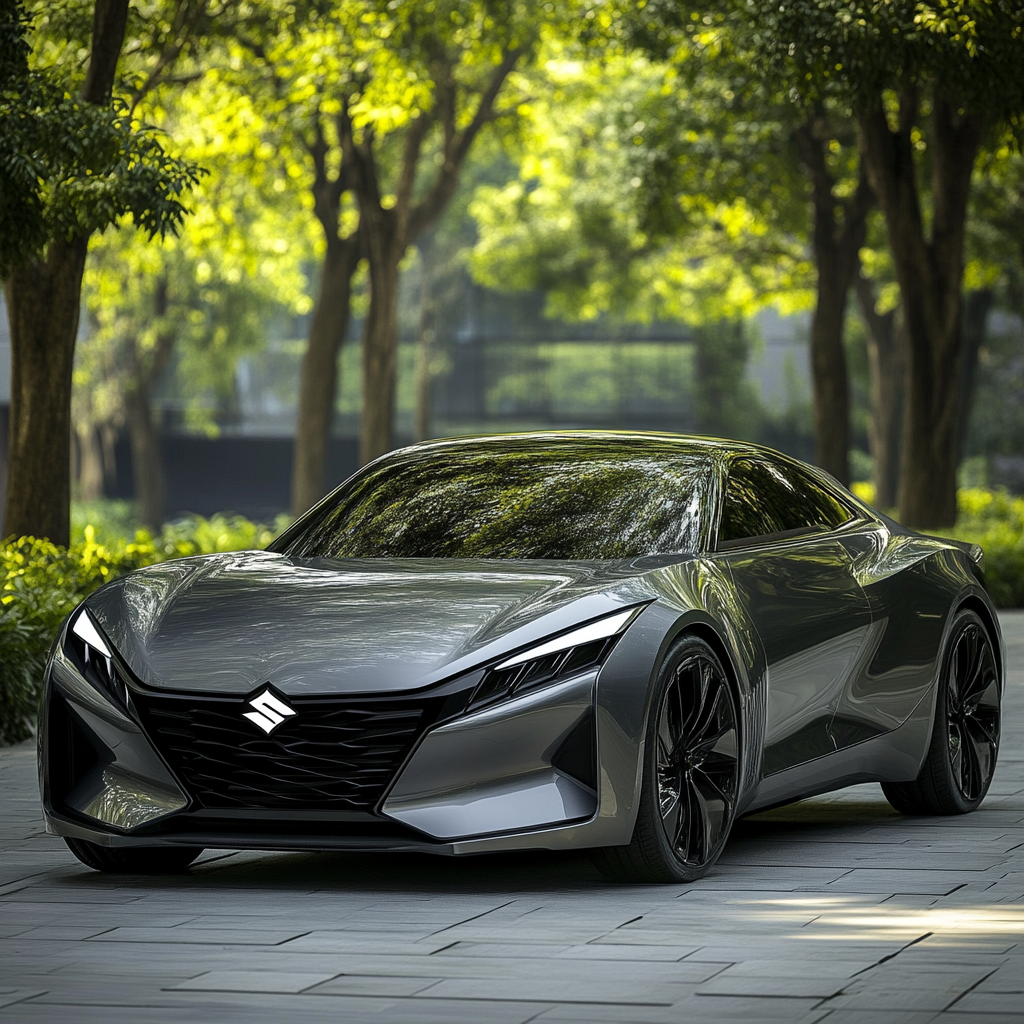
Suzuki Front Coupe was a concept car introduced by Suzuki at the Geneva Motor Show in 1970. While the model never entered mass production, it left a significant mark in the brand’s history, serving as a precursor to future developments and combining style with technical innovations of its time.
The concept featured a 1.1-liter V4 engine, providing sufficient power for a compact coupe and ensuring good dynamics on the road. It blended a sporty character with practicality for drivers seeking an elegant yet functional car for everyday use.
Although the Suzuki Front Coupe never made it to production, it laid the groundwork for the company’s future designs in the sports car segment. It also highlighted Suzuki’s desire to create vehicles that could combine style, innovation, and accessibility. This concept remained an important step in the brand’s development, even though it was never part of the production lineup.
In Suzuki’s history, the Front Coupe became a symbol of the company’s ambition to surprise the market with original and unconventional ideas, which inspired further experiments in the sports and compact car segments.
Read too:
New Lamborghini Bravo specs are still unknown
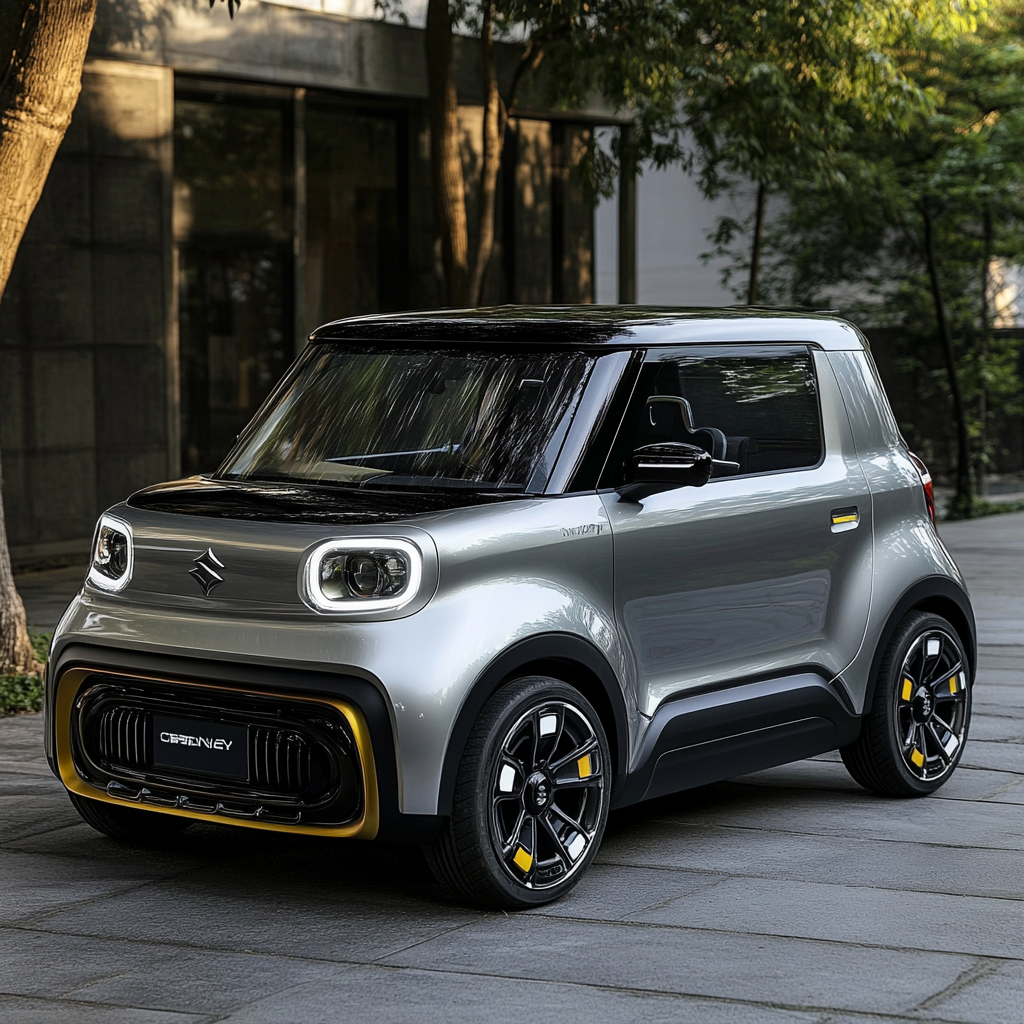
Suzuki Twin: first hybrid Kei car
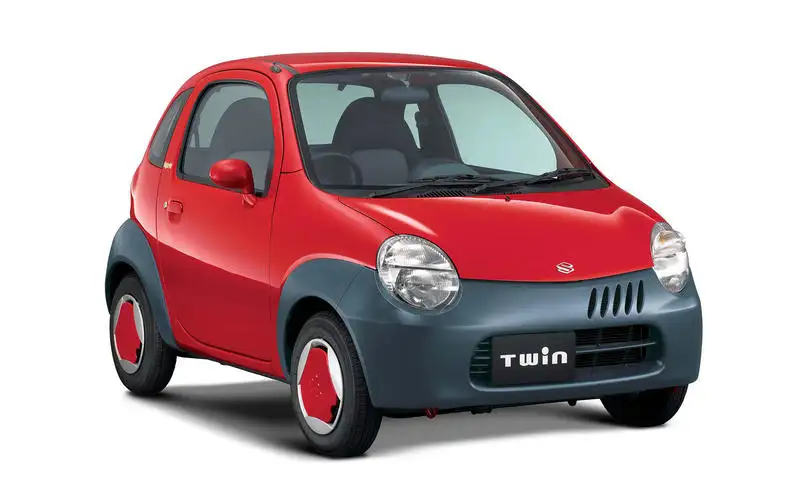
Suzuki Twin was the first hybrid kei car (mini-car) from Suzuki, introduced in 2003. The model featured a hybrid variant that combined a 660cc gasoline engine with an electric motor. This hybrid version was part of the company’s strategy to create eco-friendly and efficient vehicles for the Japanese market, where there was a strong demand for compact, economical, and environmentally-friendly cars.
The hybrid version of the Suzuki Twin was highly fuel-efficient, reducing fuel consumption and lowering CO2 emissions, meeting the Japanese environmental standards. This was also an important step for Suzuki in developing hybrid technologies for small cars.
Although the Suzuki Twin didn’t gain widespread popularity outside Japan, its role as the first hybrid kei car from the company marked a significant step in the development of eco-friendly technologies in mini-cars.
Read too:
Top 5 the Most Beautiful Italian Supercars
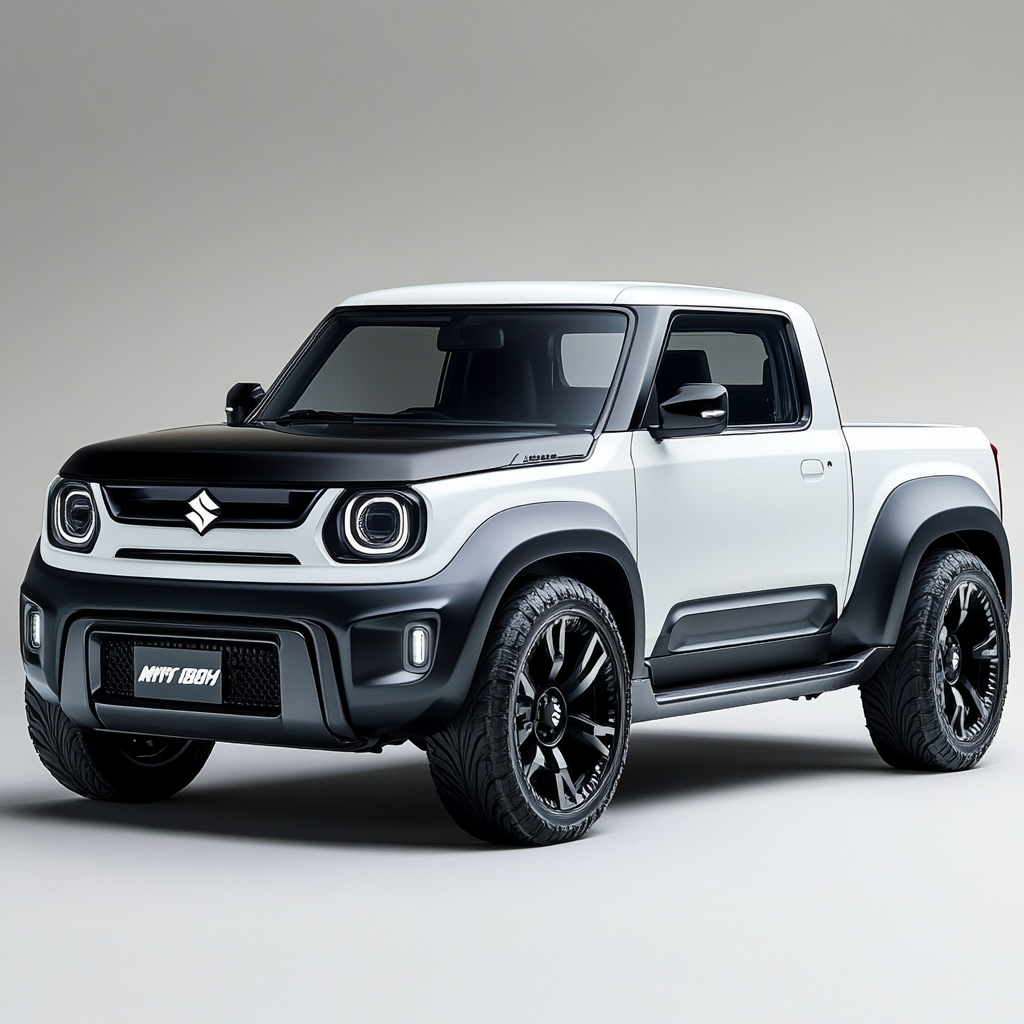
Suzuki Mighty Boy: super smal pickup
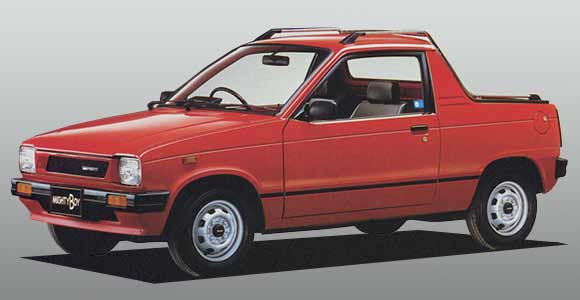
Suzuki Mighty Boy is a small pickup truck introduced by Suzuki in 1983. It is one of the most interesting and unconventional cars of its time, combining the compactness of a city car with cargo capabilities, making it perfect for carrying small loads in urban environments. This car became popular in Japan due to its unique design and practicality.
Mighty Boy was powered by a 0.5-liter engine, which was ideal for small loads and daily city trips. Despite its compact size, the vehicle offered a relatively high payload capacity for a vehicle of its class, able to carry up to 350 kg of cargo. The pickup was lightweight and maneuverable, making it ideal for narrow city streets and tight spaces.
This car combined minimalist design with practicality, becoming a favorite among small business owners and people who needed an economical vehicle for transporting goods. It only featured the essential functions but gained popularity due to its affordability and efficiency.
The Suzuki Mighty Boy made its mark in history as one of the first small utility vehicles that combined functionality with economy. It also represents how Suzuki catered to the needs of the Japanese market, where compactness and space-saving were key requirements.
Despite its popularity in Japan, the Mighty Boy didn’t gain widespread recognition outside of Japan, but it remains an important part of the company’s history and is a sought-after model among vintage car collectors.
Read too:
From Dream to Legend: The Story of Lotec
Suzuki Wagon R Wide: swiss army knife of minivans
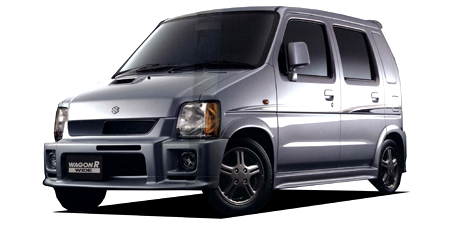
Suzuki Wagon R Wide is a compact minivan introduced by the Japanese automaker Suzuki in 1997 as an extended version of the popular Wagon R. It was a more spacious and comfortable model, aimed at family trips and the need to transport more passengers and cargo. Wagon R Wide became one of the most notable representatives of the minivan class in Japan in the late ’90s.
The model offered additional space due to its increased width and improved design. It was designed to meet the needs of Japanese drivers who were looking for a car with a high level of comfort, yet compact and convenient for urban use. Suzuki Wagon R Wide had a larger cabin compared to the base version and was equipped with practical features to enhance comfort on long-distance trips.
The car offered a wide range of small-displacement engines that ensured fuel efficiency, which was an important factor for Japanese drivers. Thanks to its high maneuverability and comfortable interior, the Wagon R Wide was popular among families and people who often used the car for city and suburban trips.
This car also demonstrates Suzuki’s commitment to providing affordable, economical transportation for a wide audience, while still focusing on comfort and practicality. At the same time, the model had a unique style, allowing it to stand out among other minivans of that time.
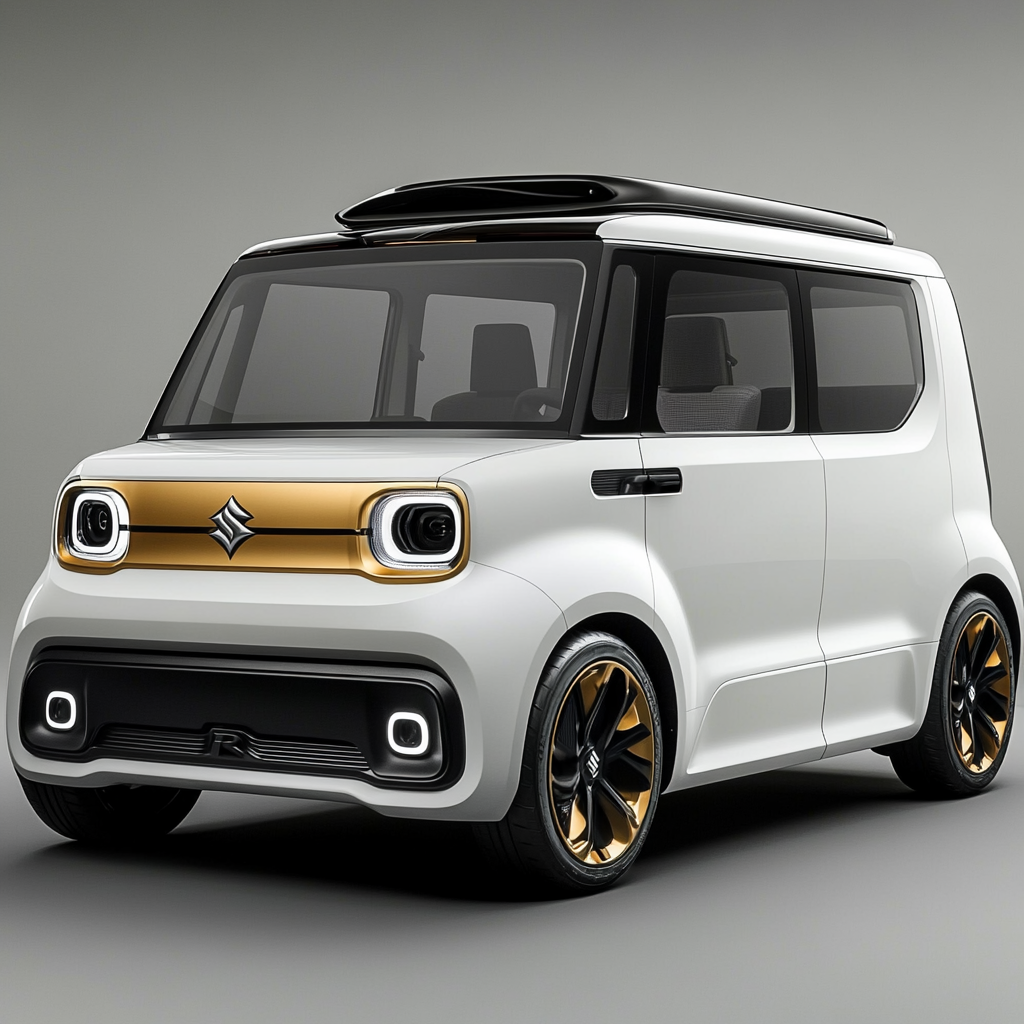
conclusion:
During Osama Suzuki’s management, Suzuki became exactly as we remember it: practical, reliable, etc. However, as we have just understood, they really liked to combine these features with driveability and excellent design.